
Identification marks
Terminology: Officially, a “health mark” is applied directly to products of animal origin (POAO) such as meat carcases to indicate that they have been assessed as fit for consumption. The “identification mark” is a similar indication but applied to the packaging of PAOA and indicates that the production establishment meets requirements for safety and hygiene. The code indicates the production unit. Enforcement officers have copies of the codes and, if interested, consumers can access the codes on the website of the Food Standards Agency [See: Food Standards Agency Data].
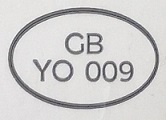
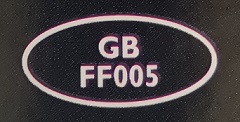
Here are two examples of identification marks on products manufactured in the UK which have been given a “GB” identification mark (which replaced the EU mark required whilst the UK was an EU Member State).
This first one is from a pack of Bacon:
This second one is from a pack of Skimmed milk powder:
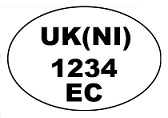
Products manufactured in Northern Ireland will still have an identification mark conforming to the EU requirements. This is an example taken from the Food Standards Agency website:
The following guidance has been given by the FSA:
- There is no minimum or maximum size for the identification mark. However, it must be a legible and indelible oval mark, and the characters easily decipherable.
- The identification mark must contain either the full country name “United Kingdom” or the “GB” or “UK” abbreviation for POAO produced in England, Scotland and Wales. The UK Government recommends use of the full country code “United Kingdom” where it is practical
- For POAO produced in Northern Ireland, the new identification mark must contain either the full country name “United Kingdom (Northern Ireland)” or the “UK(NI)” abbreviation followed by the approval number of the establishment. It must also contain the letters “EC” after the approval number.