
Nutrition claims: Low fat / high protein
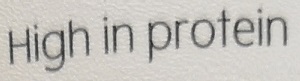
This example considers the labelling of a pack of Cottage cheese which makes two nutrition claims - low fat and high protein.
The Regulation controlling nutrition claims requires (in the Annex) that nutrition claims can only be made it the product meets specified conditions:
- Low fat: A claim that a food is low in fat, and any claim likely to have the same meaning for the consumer, may only be made where the product contains no more than 3g of fat per 100g for solids or 1.5g of fat per 100ml for liquids (1.8g of fat per 100ml for semi-skimmed milk).
- High protein: A claim that a food is high in protein, and any claim likely to have the same meaning for the consumer, may only be made where at least 20% of the energy value of the food is provided by protein.
The figure is the main text from the lid of the tub of Low fat pineapple cottage cheese.

This text is taken from the back of the tub:
In order to claim “Low fat” the fat content of the cottage cheese must “contain no more than 3g of fat per 100g”. Given below is the nutrition panel taken from the tub. It can be seen that the fat content is 1.7g per 100g. The “Low fat” condition is therefore met.
In order to claim “High protein”, the protein must represent at least 20% of the energy content of the food. The panel indicates that the protein content is 4.7g per 100g and that the total energy content is 334kJ per 100g. Protein contains 17kJ/g and therefore 4.7g represents 80kJ which is about 24% of the total energy. The “High protein” condition is therefore met:

For the main index page for this site, go to Food Labelling in the UK: A Guide to the Legal Requirements